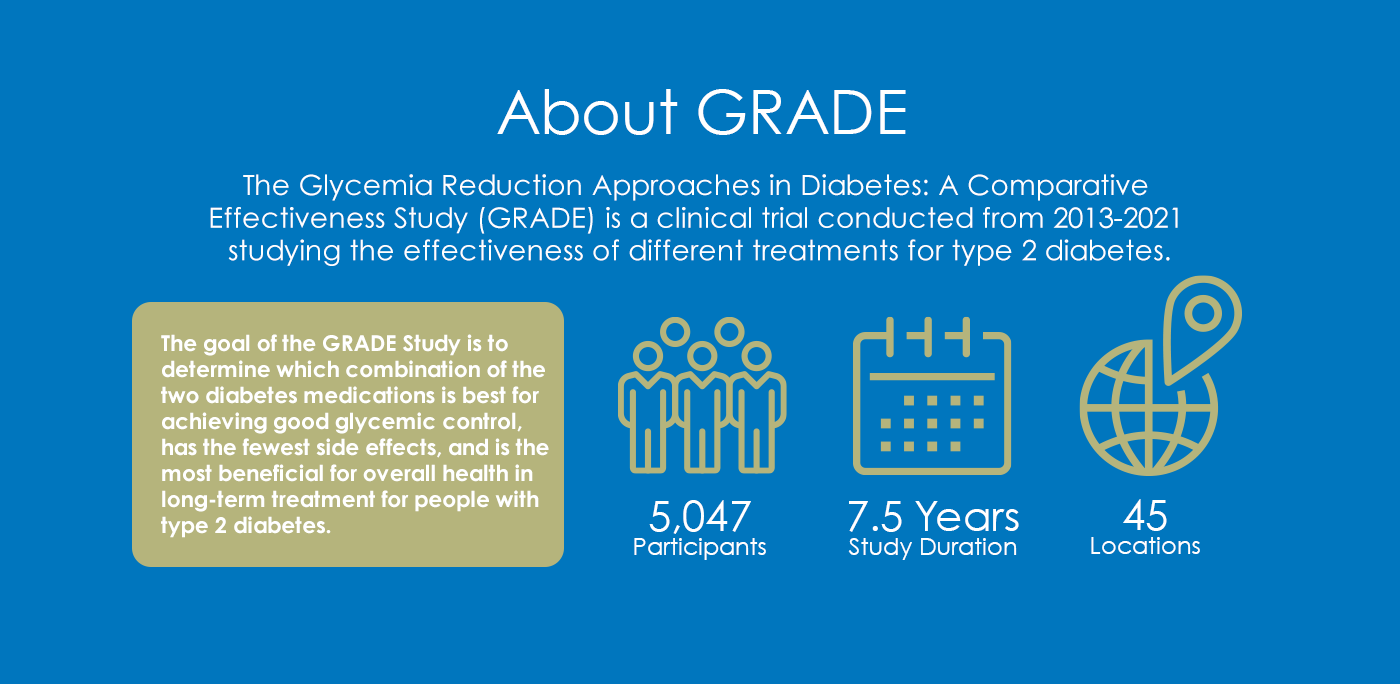
HOME - GRADE
common medications for type 2 diabetes

The GRADE study was recognized as one of the 2023 Top 10 Clinical Research Achievements by the Clinical Research Forum
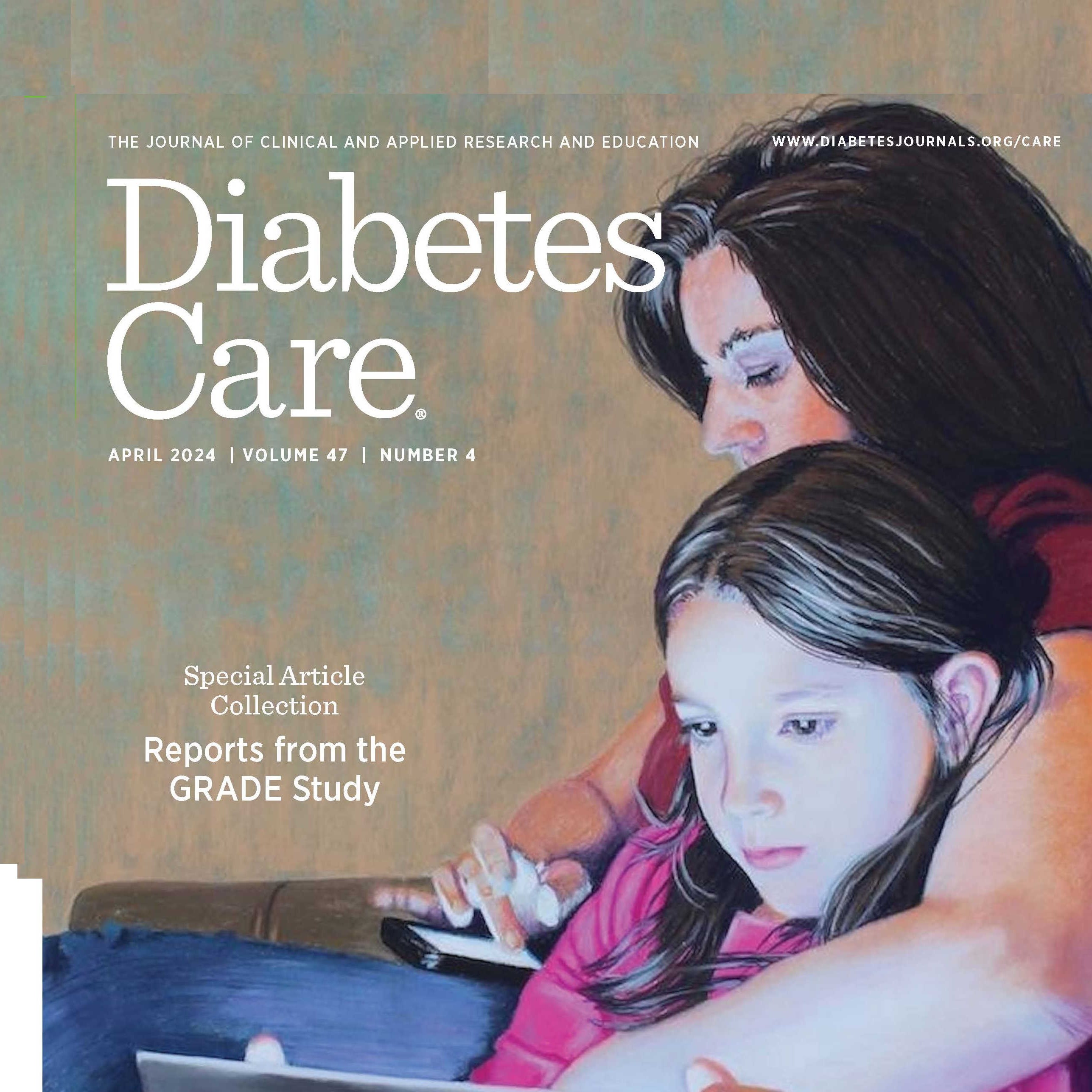
Diabetes Care publishes special issue, April 2024 featuring ten new articles with important findings from GRADE

Analysis of cardiovascular outcomes confirm modest superiority of liraglutide among people with T2DM at relatively low cardiovascular risk
We observed no difference in kidney outcomes over 5 years across participants randomized to one of 4 glucose-lowering medications added to metformin


We measured GAD-65 antibodies in a subgroup of GRADE particpants and found no association with β-cell dysfunction in GRADE
Improved HbA1c
All study medications (insulin glargine, liraglutide, sitagliptin, and glimepiride) when added to metformin lowered HbA1c. After 4 years of follow-up, participants taking liraglutide or insulin glargine were most successful in maintaining target blood glucose levels.
Side Effects
On average, participants in all treatment groups lost weight. Over 4 years, participants in the liraglutide and sitagliptin groups lost more weight than those assigned to the glargine and glimepiride groups. Overall, severe hypoglycemia was rare. Participants taking liraglutide reported more frequent gastrointestinal side effects and weight loss compared to the other 3 groups.
Subgroup Differences
No differences were seen in participants reaching the primary outcome of HbA1c level of 7.0% or higher, by sex, age, or race or ethnic group for subgroups prespecifed by the study.
Cardiovascular Benefits
Liraglutide reduced cardiovascular disease, representing the first demonstration of the CVD effectiveness of a GLP-1 receptor agonist RA in a generally low-risk population.
Liraglutide reduced cardiovascular disease, representing the first demonstration of the CVD effectiveness of a GLP-1 receptor agonist RA in a generally low-risk population.
Diabetes-Specific (Mircrovascular) Complications
In the setting of excellent glycemic and other risk-factor management, all four medications were similarly effective in lowering the risk of microvascular disease.
Genetic Factors Influencing Response to Individual Therapies
Specific genetic factors were identified that influence the response to individual medications.
Specific genetic factors were identified that influence the response to individual medications.